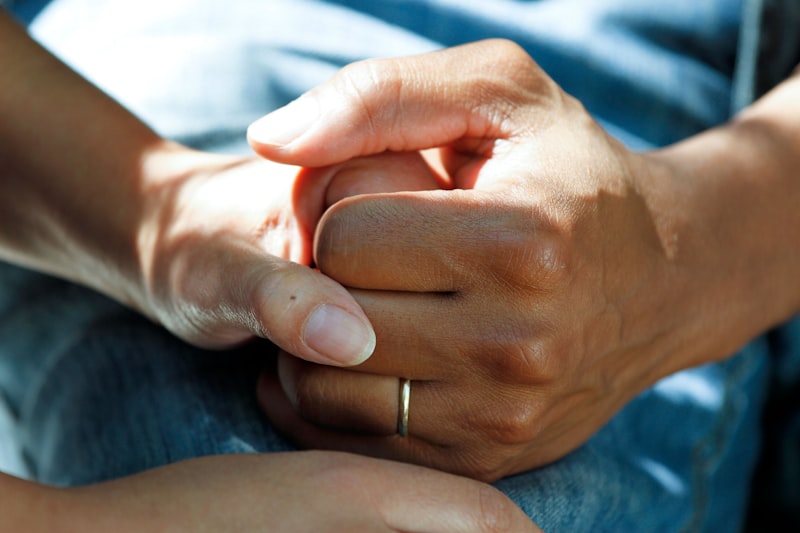
I have sat with families in hospital rooms, in living rooms, and at kitchen tables. I have held hands with caregivers who were exhausted, confused, and quietly heartbroken. And over and over again, I have heard the same question: 'What am I supposed to do?'
Dementia is not a single disease. It is an umbrella term for a group of symptoms affecting memory, thinking, and social abilities severely enough to interfere with daily life. Alzheimer's disease is the most common form, but there are others. What they all share is this: they change the person you love, gradually and irreversibly, and they change you too.
This guide is not clinical. It is human. It is everything I have learned from nurses, doctors, and most importantly, from the families who taught me what love looks like when it has to show up every single day.
The first and most important thing I tell families is this: your loved one is not doing this on purpose. When they repeat themselves for the fifth time in an hour, when they accuse you of stealing something, when they don't recognize your face, that is the disease. Not them.
Dementia damages the brain in ways that strip away the ability to form new memories, process information, and eventually, to recognize the people they love most. The person you knew is still in there. They may surface in unexpected moments, in a smile, in a song they remember, in the way they light up when you walk in the room. Hold onto those moments.
Understanding the common behaviors is crucial. Repetitive questions happen because their brain cannot retain the answer — it's not a lack of attention. Sundowning, which is increased confusion and agitation in the late afternoon and evening, is very common and very real. Wandering is often driven by a need to fulfill a past routine or escape discomfort. Aggression or resistance to care is usually rooted in fear, pain, or feeling out of control. Hallucinations are real to your loved one; arguing rarely helps.
As a nurse, the first thing I assess when I visit a home is the environment. Safety is not about turning a home into a hospital. It is about removing unnecessary risks while preserving as much normalcy and dignity as possible.
Install door alarms or locks placed high or low to prevent wandering outside. Remove or lock away medications, cleaning supplies, and sharp objects. Place non-slip mats in bathrooms and remove throw rugs throughout the home. Use labels on drawers and doors with simple words or pictures. Ensure consistent, adequate lighting especially at night to reduce confusion. Consider a medical alert bracelet with your loved one's name and your contact number.
Routine is medicine for someone with dementia. Their brain may not remember what happened five minutes ago, but the rhythm of a familiar day can feel deeply comforting. Try to keep wake times, meals, activities, and bedtime consistent. Reduce background noise and clutter. Soft music from their era can be remarkably soothing.
Communication with someone who has dementia requires a complete rewiring of how we normally talk to people. Logic, correction, and long explanations almost never work. What works is connection.
Approach calmly and from the front — never startle them. Get to their eye level. Smile first. Use short, simple sentences, one idea at a time, and give them time to process before you speak again. Don't correct or argue; if they think it's 1975, meet them there. Reality orientation often causes distress without benefit.
Validate feelings, not facts. 'You seem worried. I'm right here with you' is more powerful than any correction. Use their name as it grounds them and signals safety. Offer choices rather than open questions — 'Would you like tea or water?' is easier than 'What do you want to drink?' Watch your body language; they may not understand your words, but they will feel your energy. Stay soft, open, and patient.
Nobody tells you how hard it is to be accused of stealing by the person you are sacrificing everything to care for. Nobody tells you what to do when your parent doesn't recognize you. These moments are devastating, but there is guidance that can help.
When faced with accusation and paranoia, do not take it personally. This is one of the hardest things I say to families, and one of the most important. When they accuse you of stealing or lying, try: 'I can see you're upset. Let's look for it together.' Redirect, don't defend.
Resistance to bathing or personal care is extremely common and often rooted in fear or embarrassment. Try a consistent routine, the same time of day, the same sequence of steps. Offer a washcloth bath instead of a shower if needed. Play their favorite music. Never rush. Frame it positively: 'Let's get you feeling fresh' rather than 'You need a bath.'
For wandering, register your loved one with your local Safe Return or similar program. Consider a GPS tracker device. Give them safe places to walk indoors or in a secured outdoor area. Try to identify what triggers the wandering — hunger, boredom, an old routine — and address the root cause.
During sundowning episodes, keep afternoons calm and structured. Limit naps during the day. Use bright lights in the morning to help regulate their internal clock. In the evenings, use dimmer lights, softer voices, and familiar music. Have a go-to soothing activity ready for when agitation begins: a photo album, a familiar object, a hand to hold.
I want to say this clearly and without apology: caregiver burnout is a medical emergency. I have seen it destroy health, marriages, and lives. You cannot pour from an empty cup, and I am not saying that as a cliché. I am saying it as a nurse who has watched devoted caregivers collapse physically and emotionally because they refused to ask for help.
Warning signs of burnout include feeling resentful toward your loved one, neglecting your own health, meals, sleep, or medical appointments, withdrawing from friends and activities you used to enjoy, feeling hopeless or like there is no end in sight, and using alcohol or medications to cope.
Here's what you can do: Ask for help — tell people specifically what you need, as not everyone knows how to offer. Use respite care; adult day programs and in-home respite services exist for exactly this purpose. Join a caregiver support group; there is profound relief in being understood by people who truly get it. See your own doctor; your health matters as much as theirs. Allow yourself to grieve; you are losing someone even while they are still here, and that grief is real and deserves space.
Choosing to bring in additional care is not giving up. It is giving more. There comes a point in most dementia journeys where the level of care needed exceeds what one or two people can safely provide at home. Recognizing that moment is an act of love, not failure.
Consider seeking additional support when your loved one is a fall risk and you cannot be there every moment, when they are no longer able to manage any activities of daily living independently, when behavioral symptoms are escalating beyond your ability to manage safely, when your own health is suffering significantly, or when there is no longer a safe way to leave them alone at any point. Talk to your loved one's physician, a social worker, or a care manager; you do not have to figure this out alone.
Every family I have worked with has taught me something. What I have learned most is this: there is no perfect way to do this. There is only showing up, imperfectly and consistently, with as much love and patience as you can manage on any given day. Some days will be beautiful; your person will laugh at an old joke or reach for your hand and you will feel the full weight of who they are. Some days will break you. Both are part of this journey.
You are not just a caregiver. You are an advocate, a protector, a companion, and one of the most important people in your loved one's world even on the days they cannot tell you so. What you are doing matters. Please don't forget to take care of yourself too.
Resources: Alzheimer's Association (alz.org) | 24/7 Helpline: 1-800-272-3900 | Caregiver Action Network (caregiveraction.org) | Family Caregiver Alliance (caregiver.org) | National Institute on Aging (nia.nih.gov/health/alzheimers)